Pantheon Research
Overview
↓ Go to SolutionPantheon Research is a healthcare company that provides electroacupuncture equipment to clinics & medical offices. I served as the UI/UX Design Consultant on the client team in Avenues Consulting Group.

Problem
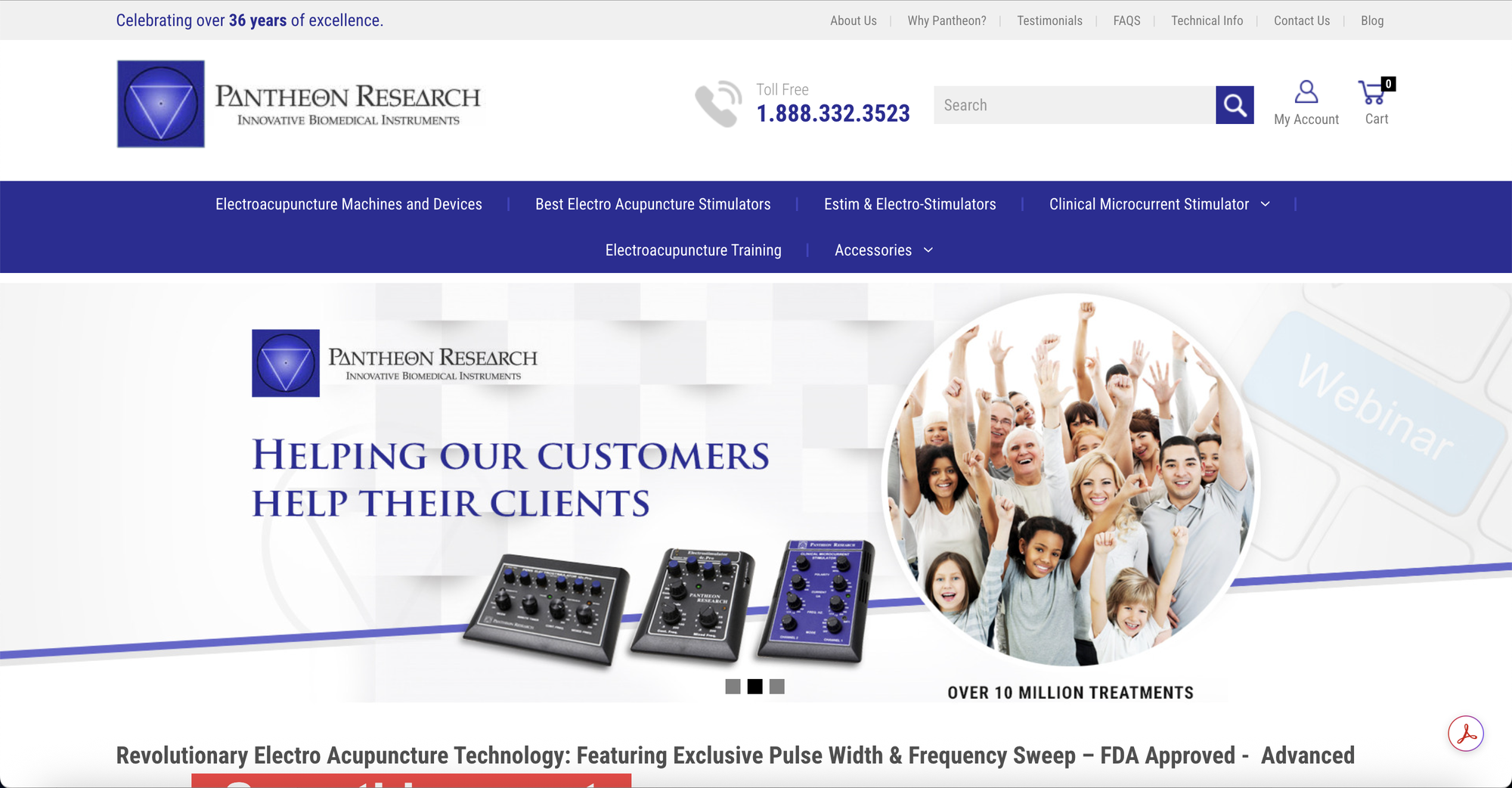
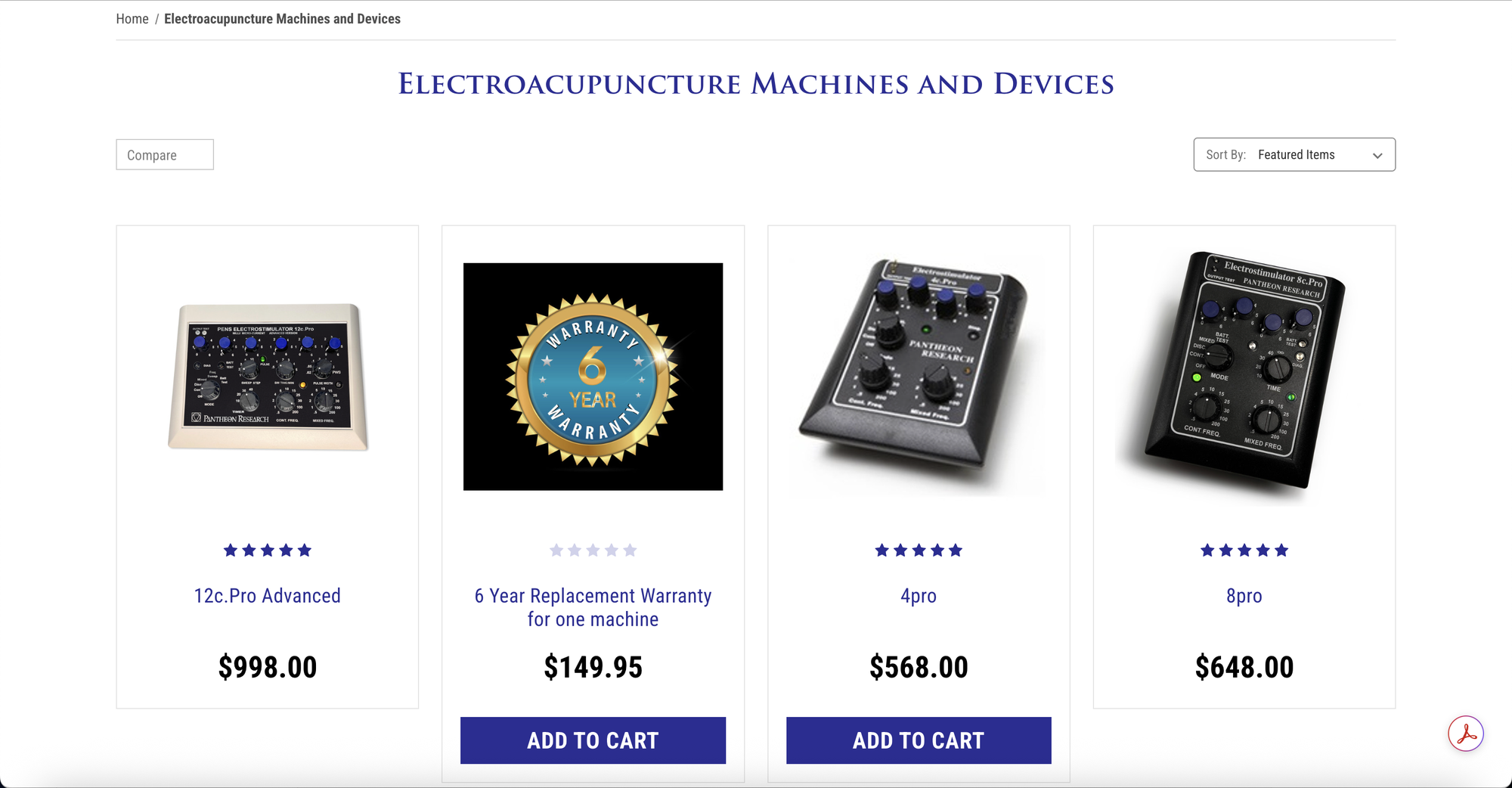
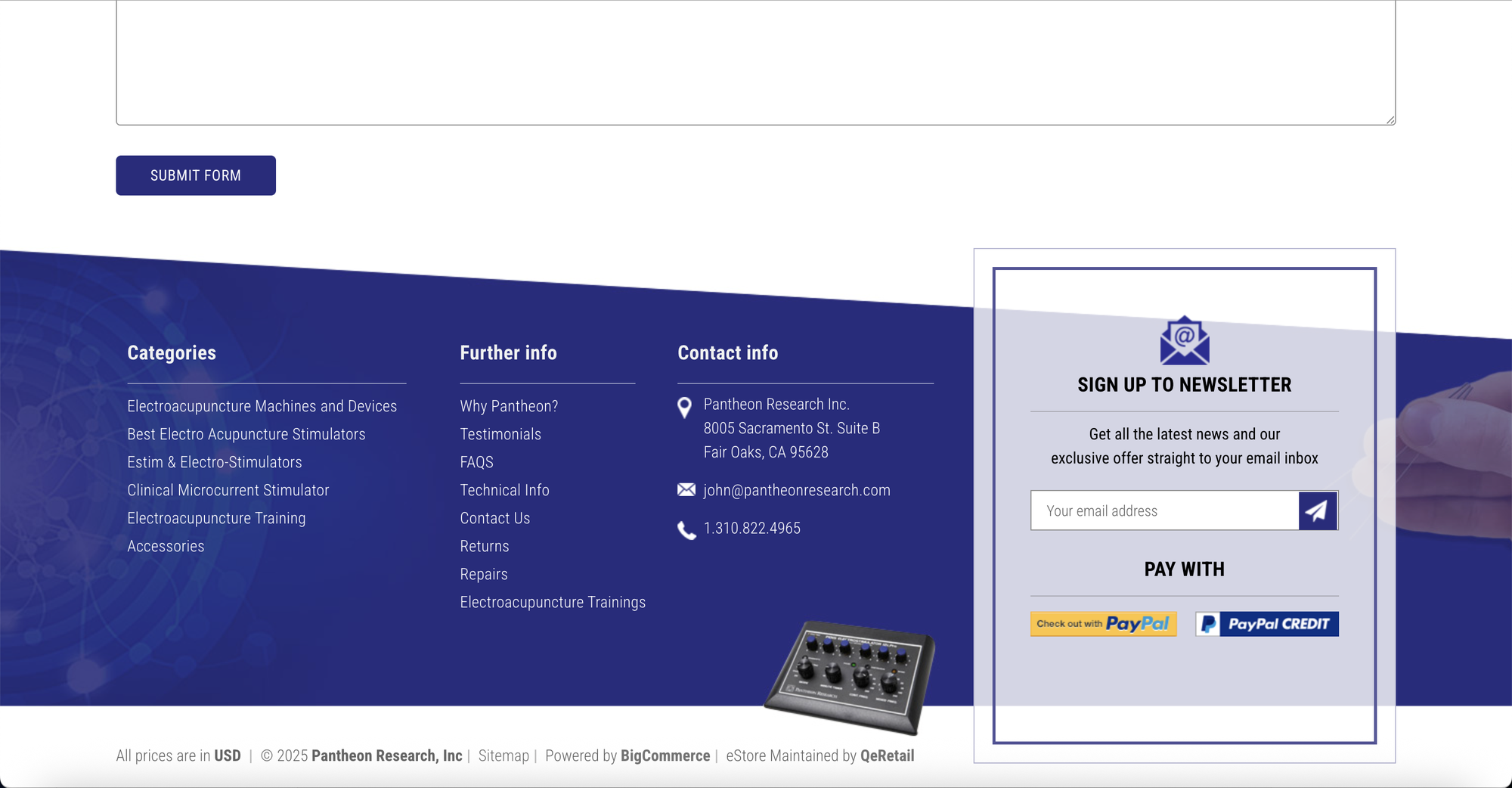
The company is run by the Founder and his wife, and they haven't had the time to update their website in years. The site was outddated, hard to navigate around, and failed to showcase their new products in an clear and concise manner. Their logo & branding was also outdated, and was not visually consistent or clear throughout their site.
Research
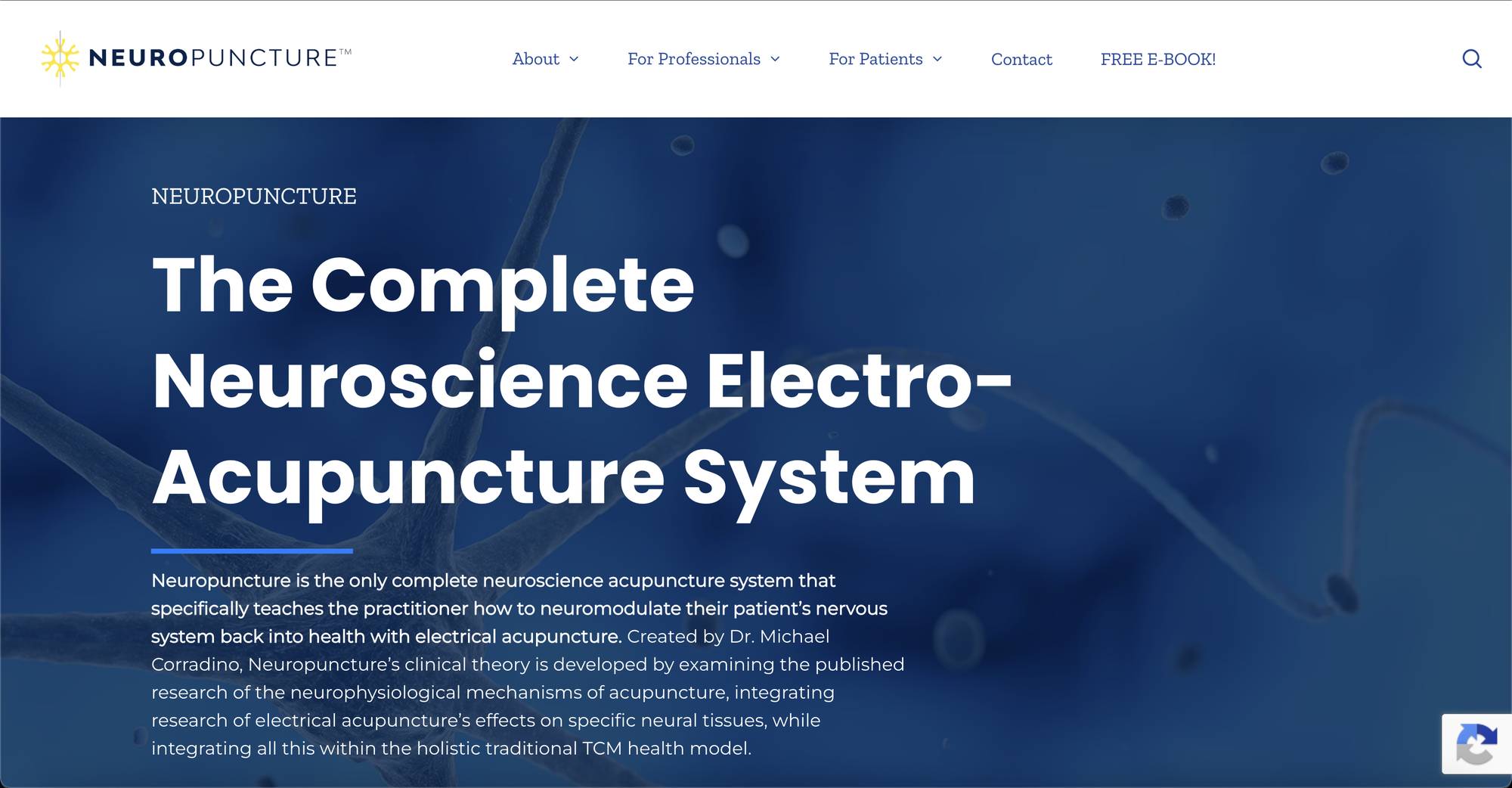
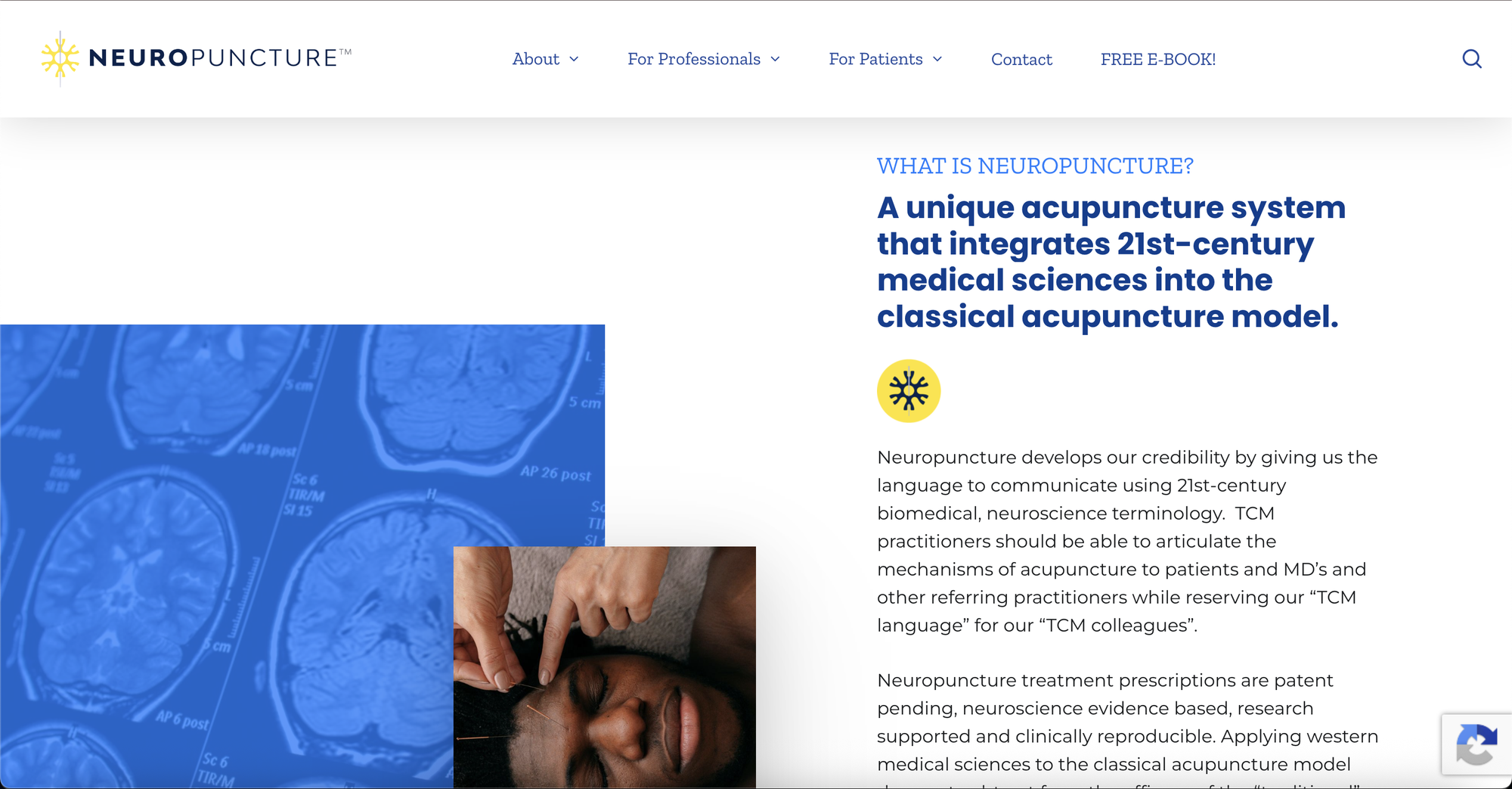
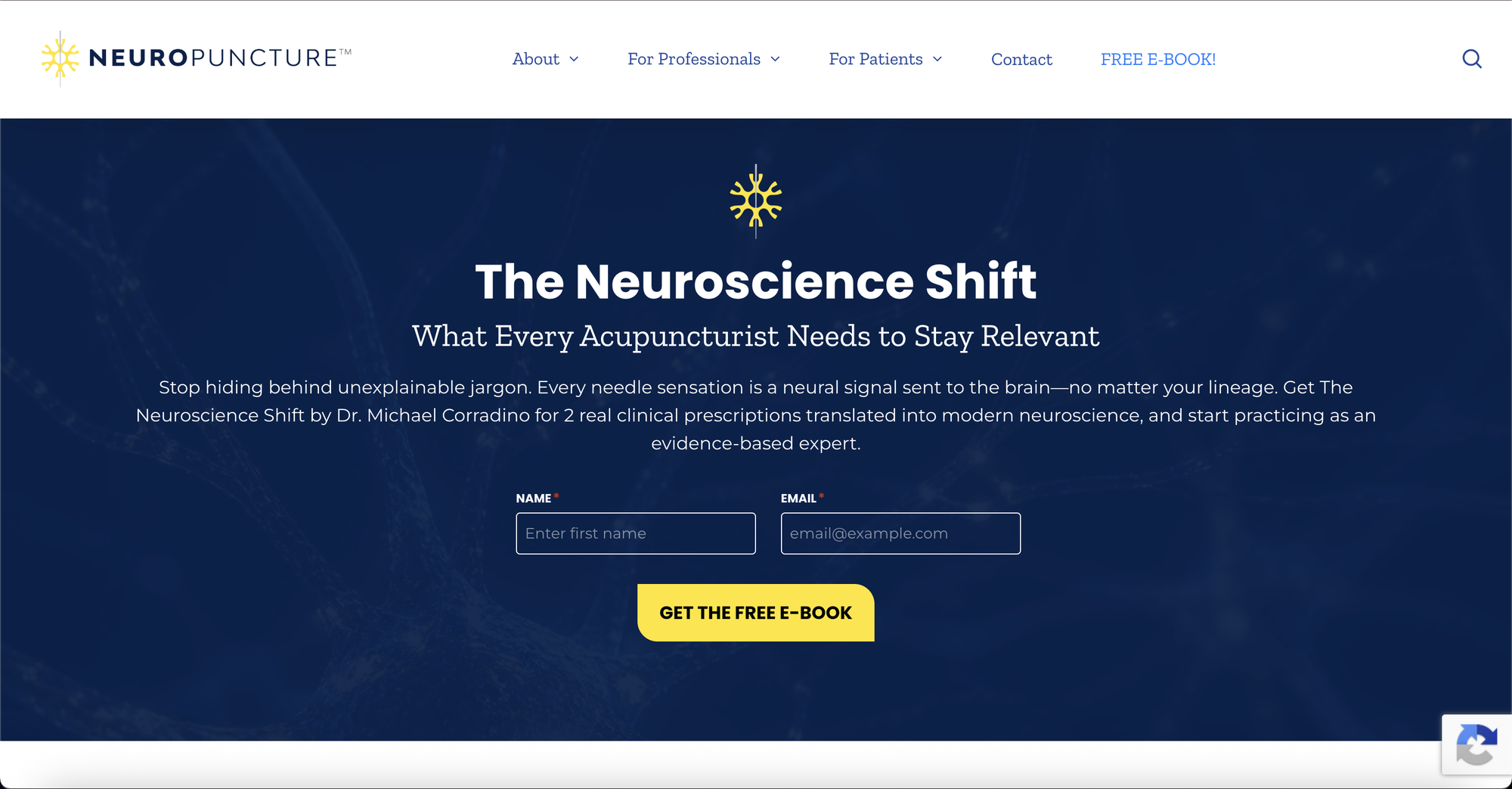
After being given the initial specs of the project, I conducted research on the current site, as well as sites of competitors in the electroacupuncture space. I was able to find a similar company called Neuropuncture, which recently had a design agency redesign their site. I was able to use this as a benchmark for the client, and show them what a modern electroacupuncture site could look like, as well as note down some insights on how to improve the Pantheon Research's site.
Ideation
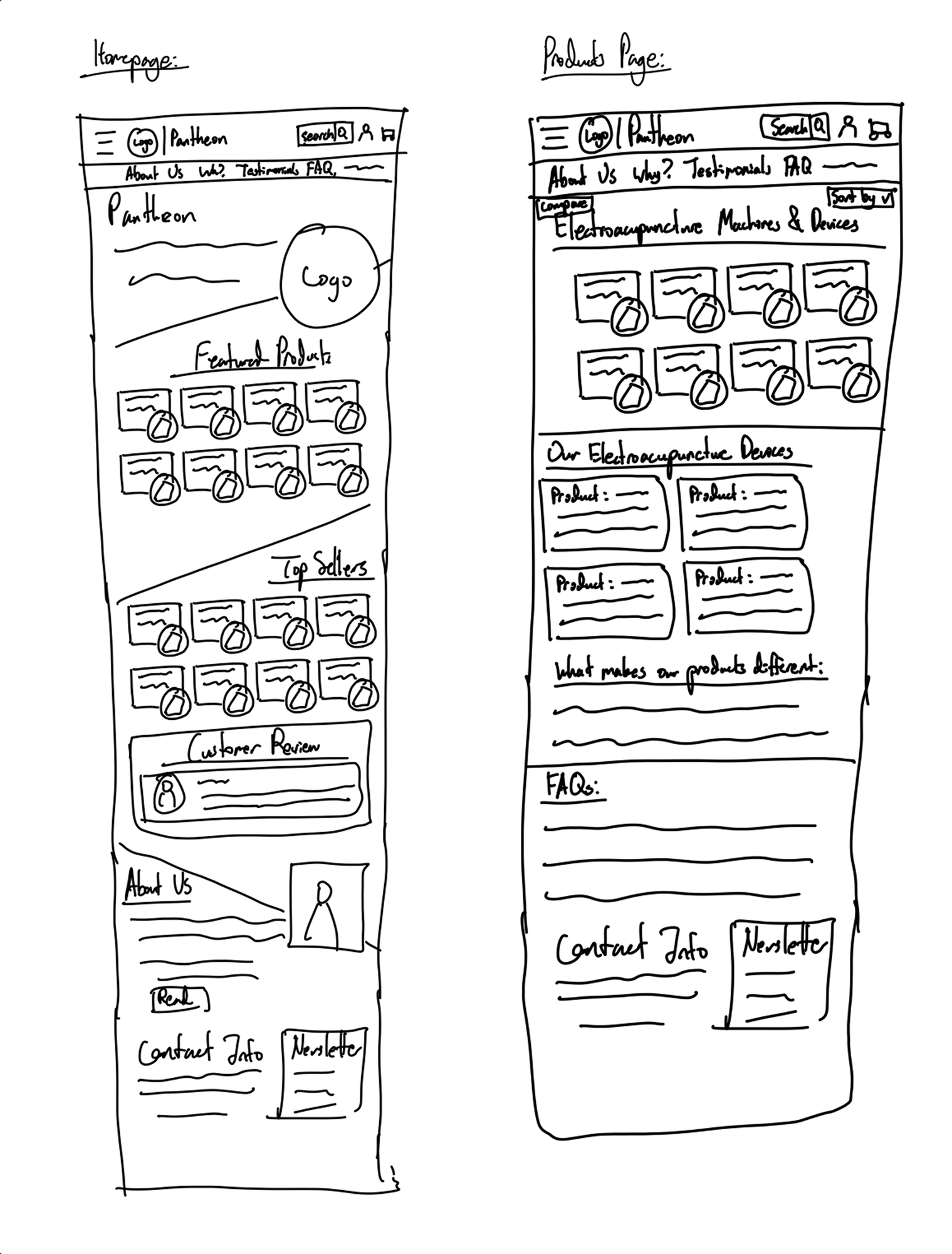
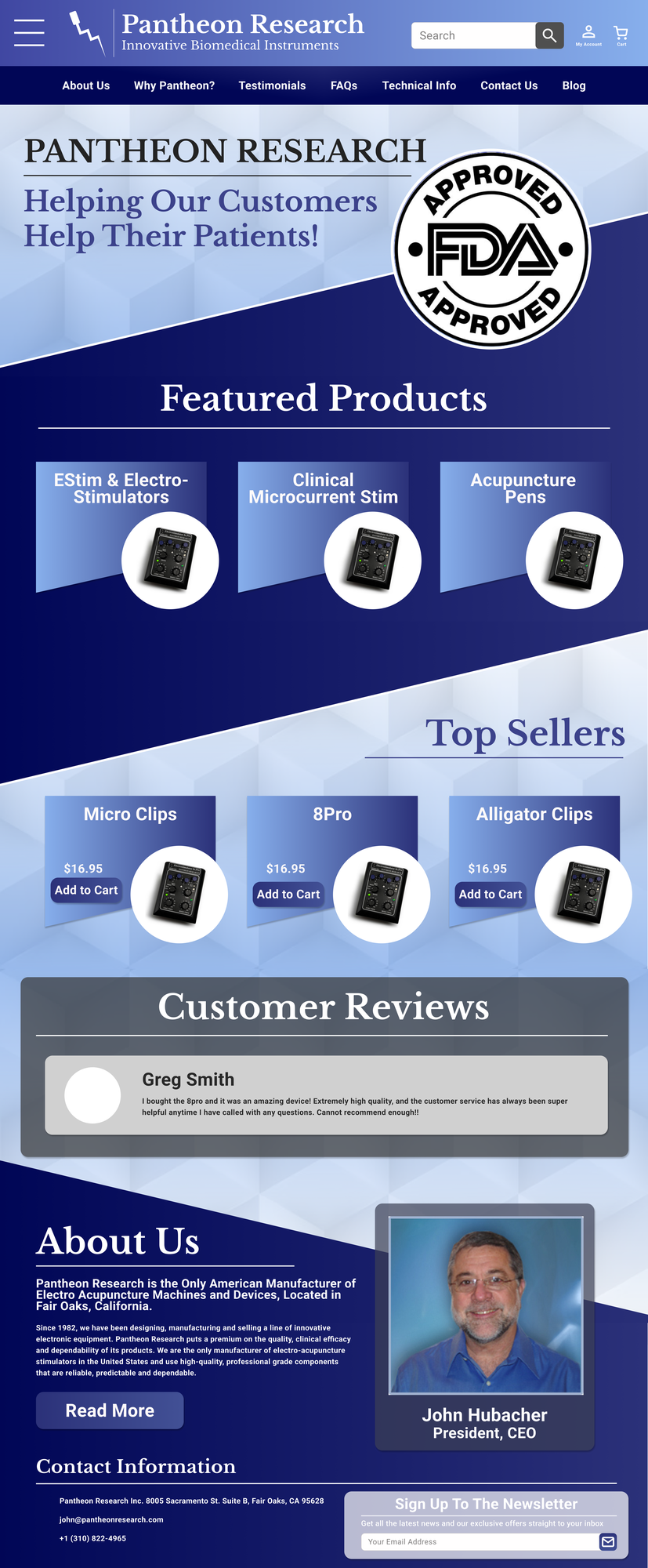
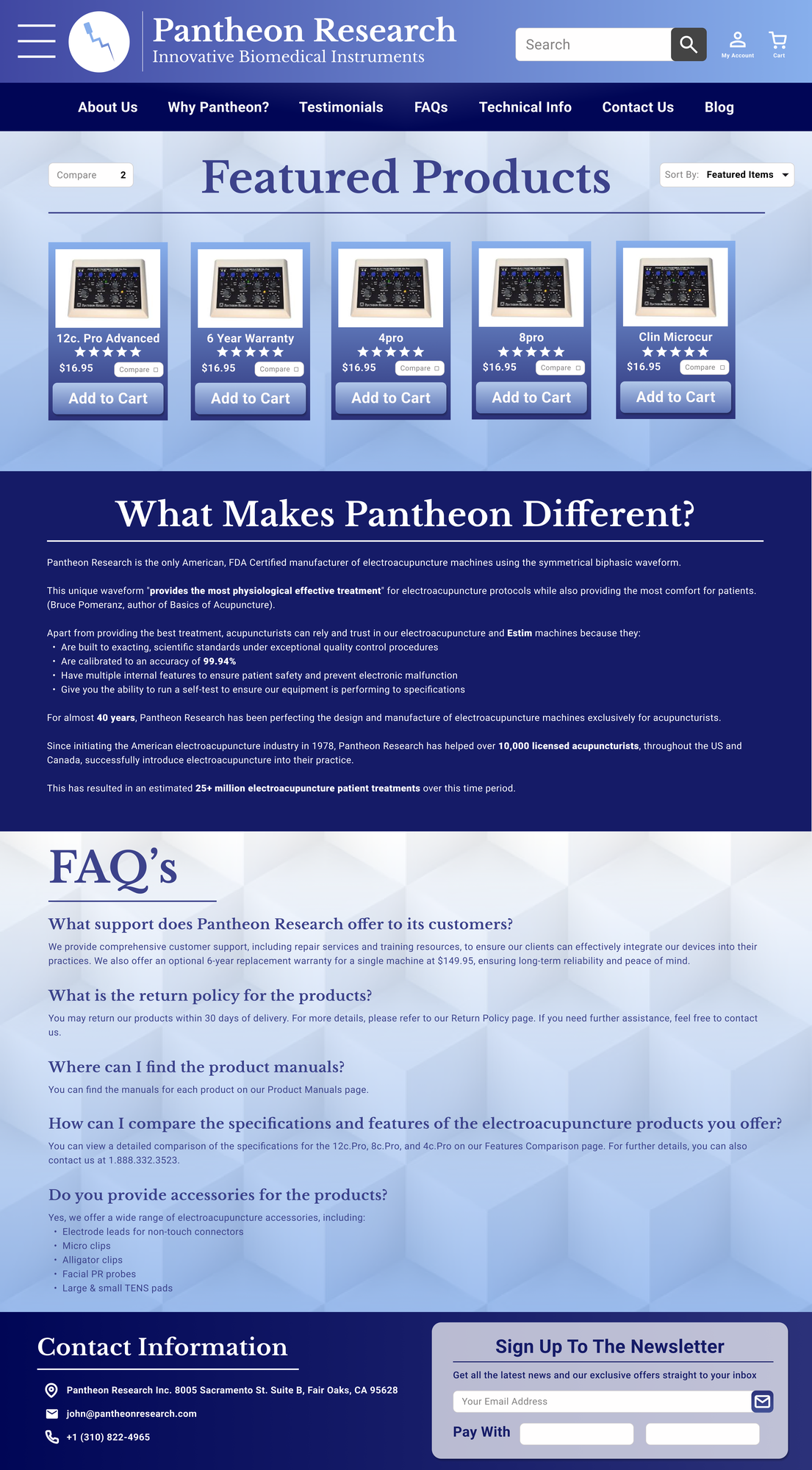
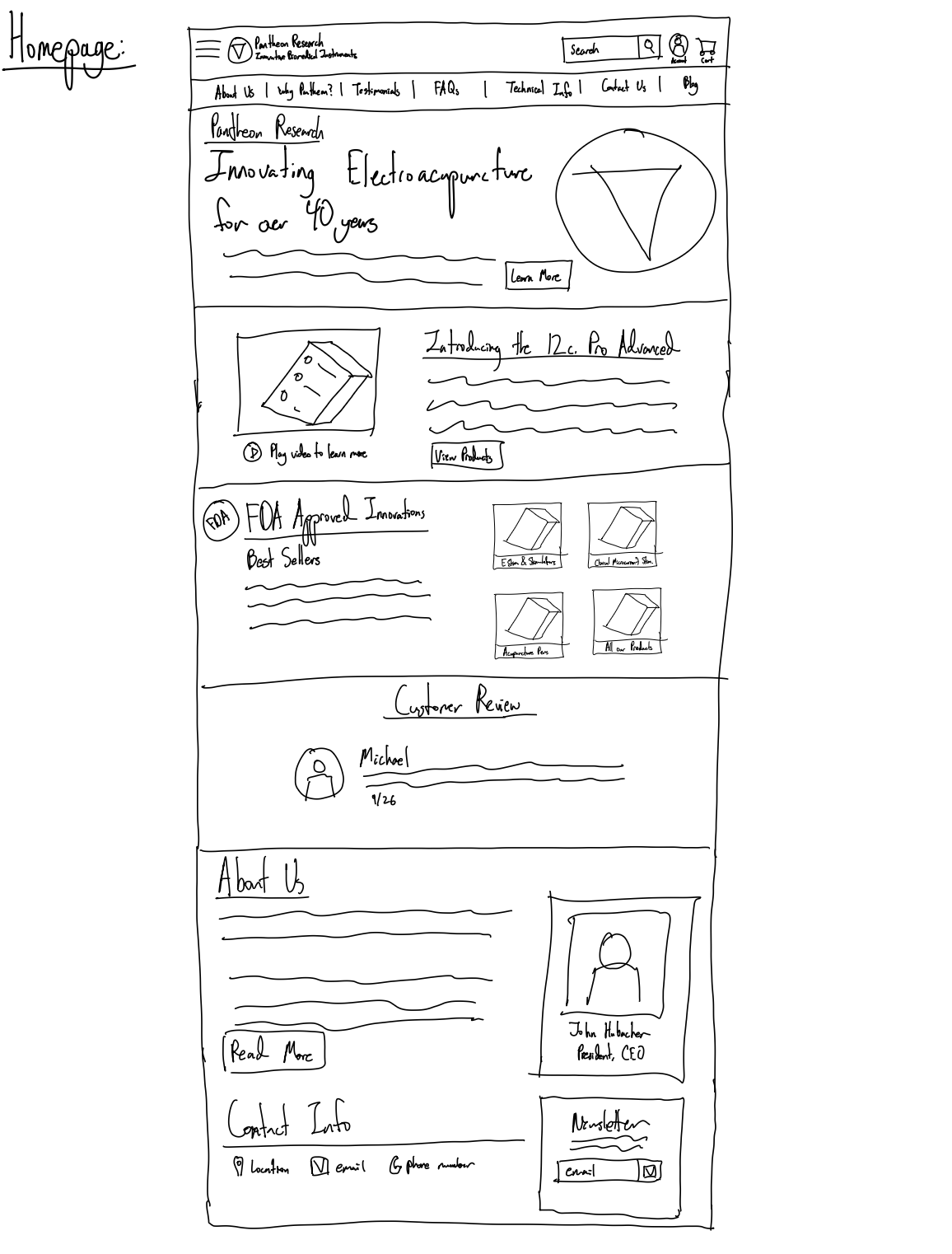
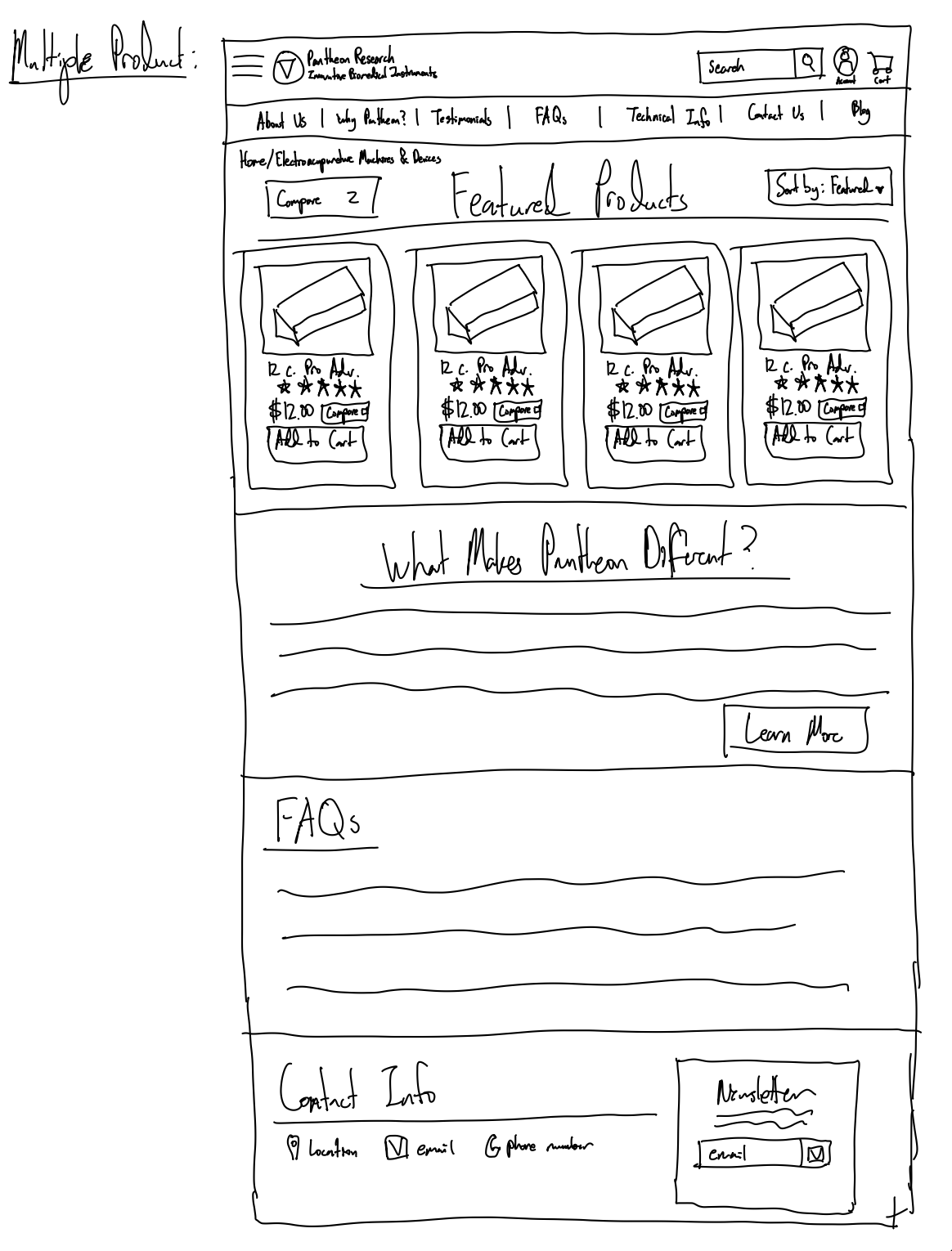
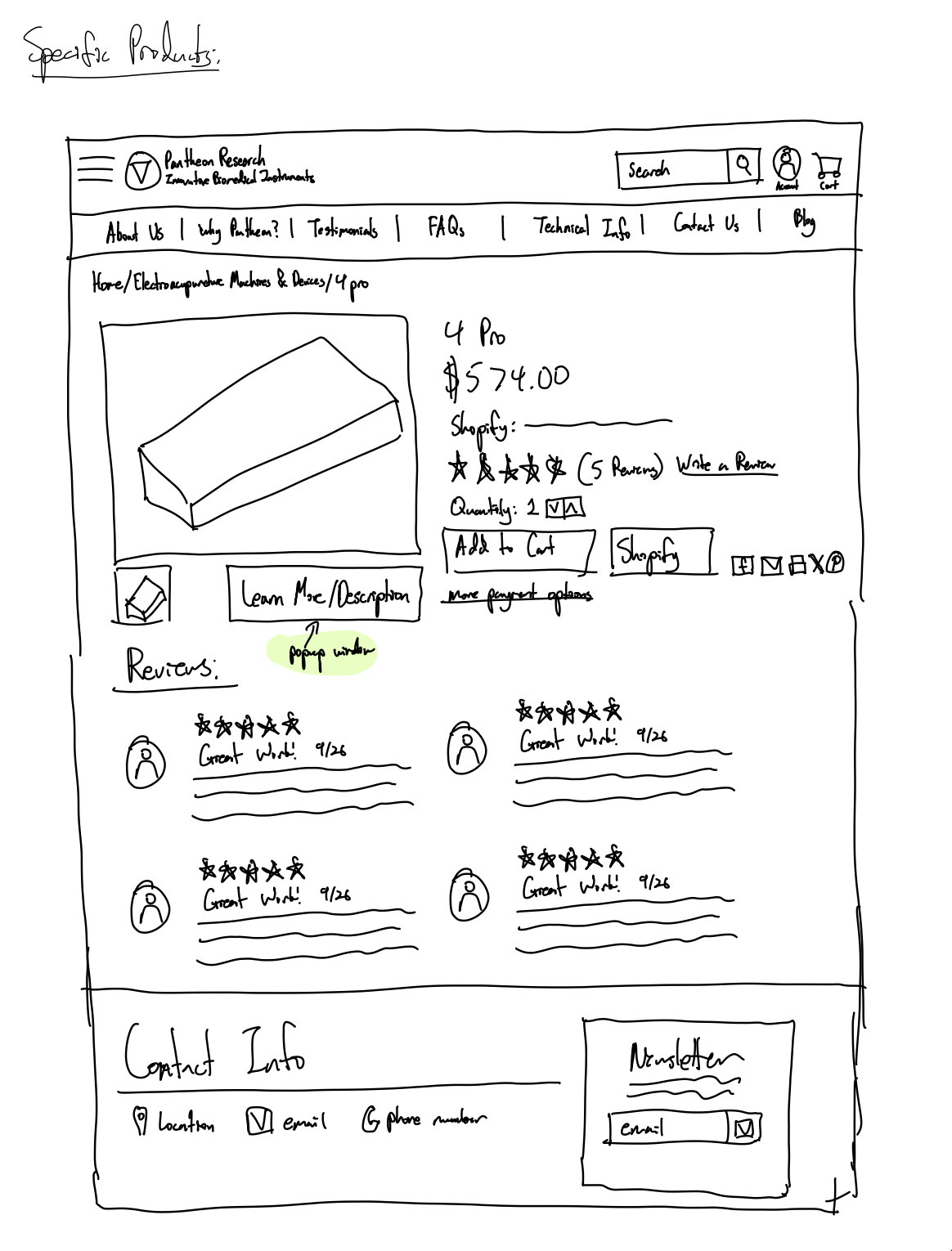
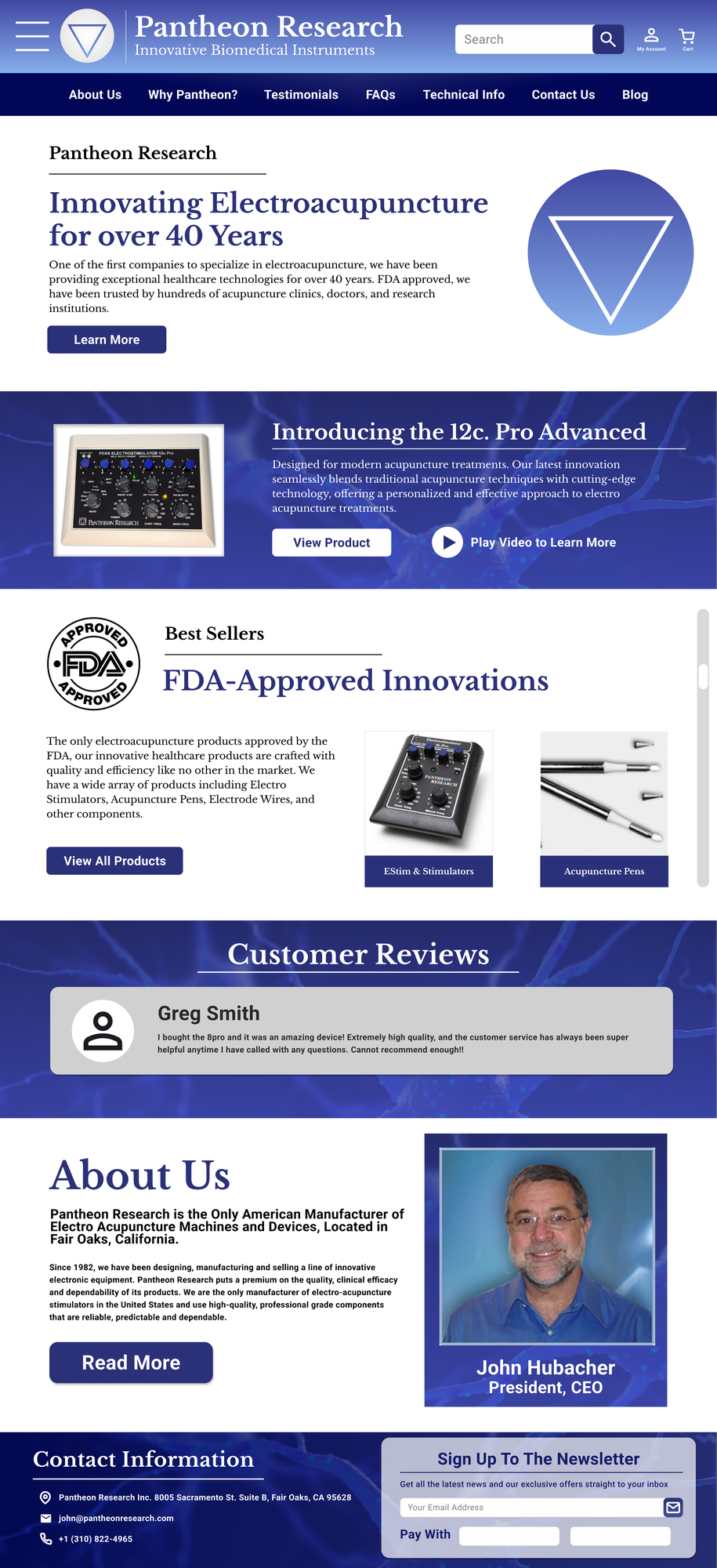
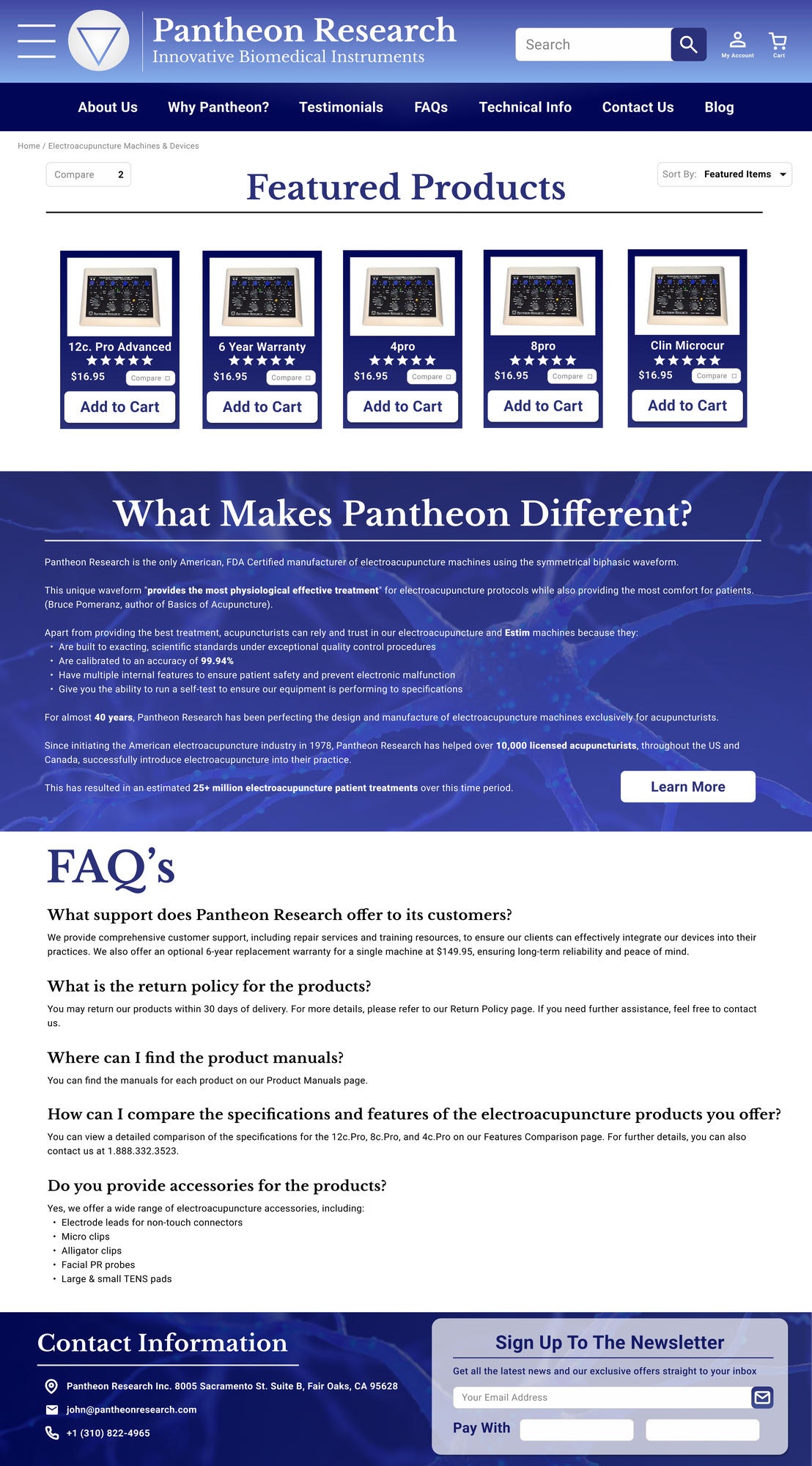
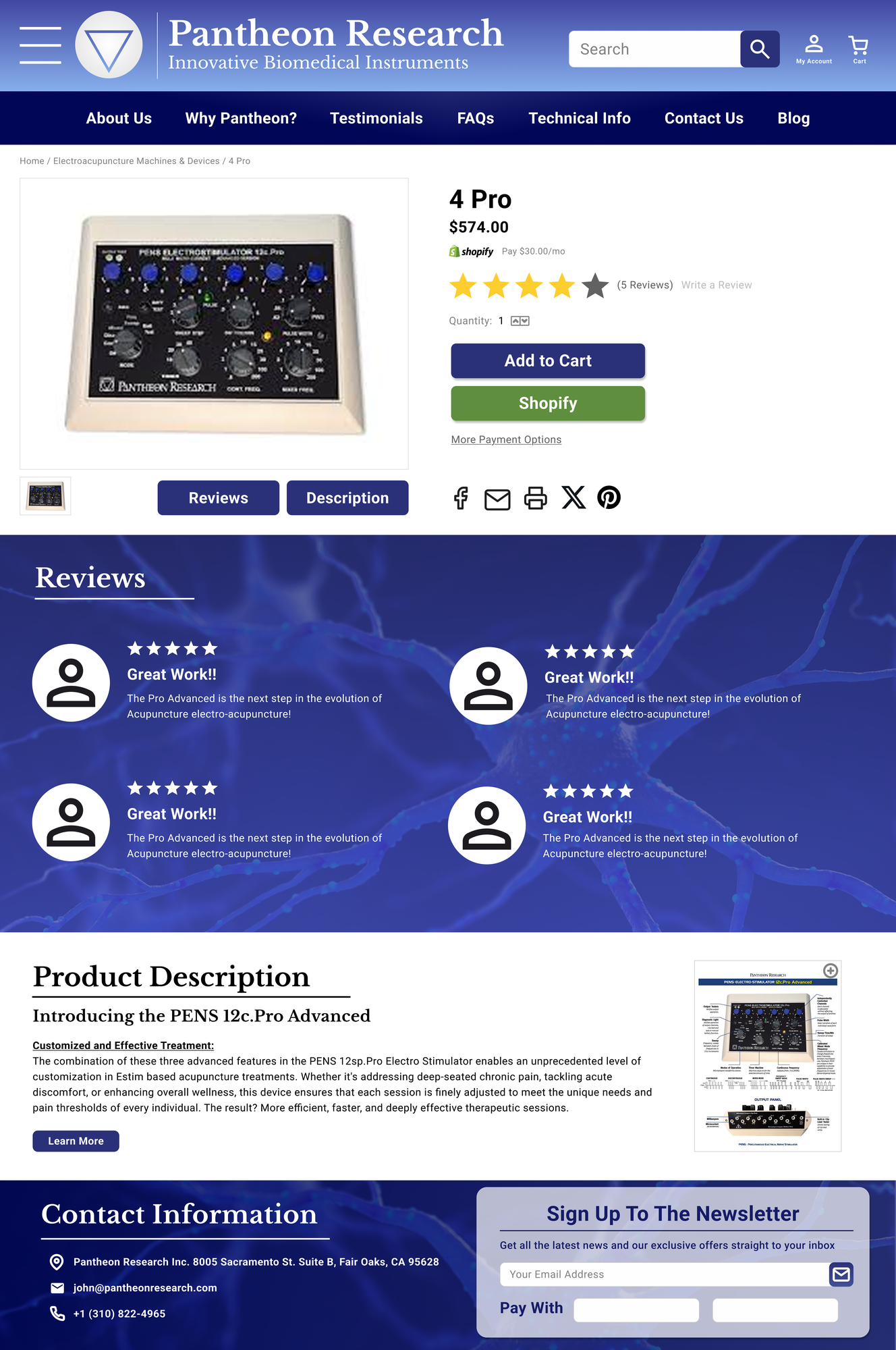
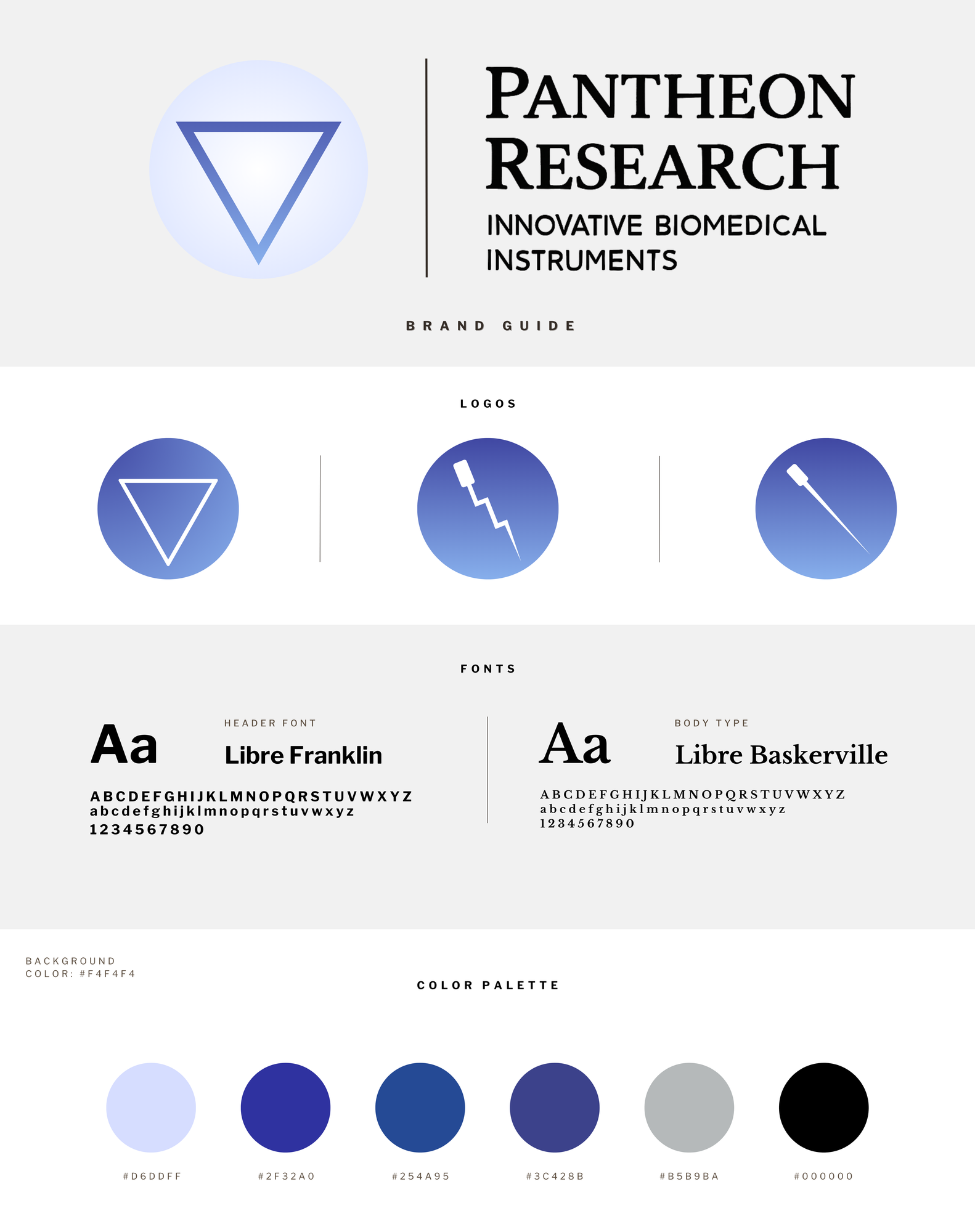
I first began with initial sketches of the homepage and the product page. These initial wireframes helped me visualize the layout of the site redesign, and I transferred these into Figma to create a more polished high-fidelity mockup. I also drafted a new logo for the company, as well as a new color palette and typography guidelines to establish a more modern brand identity.
Prototyping
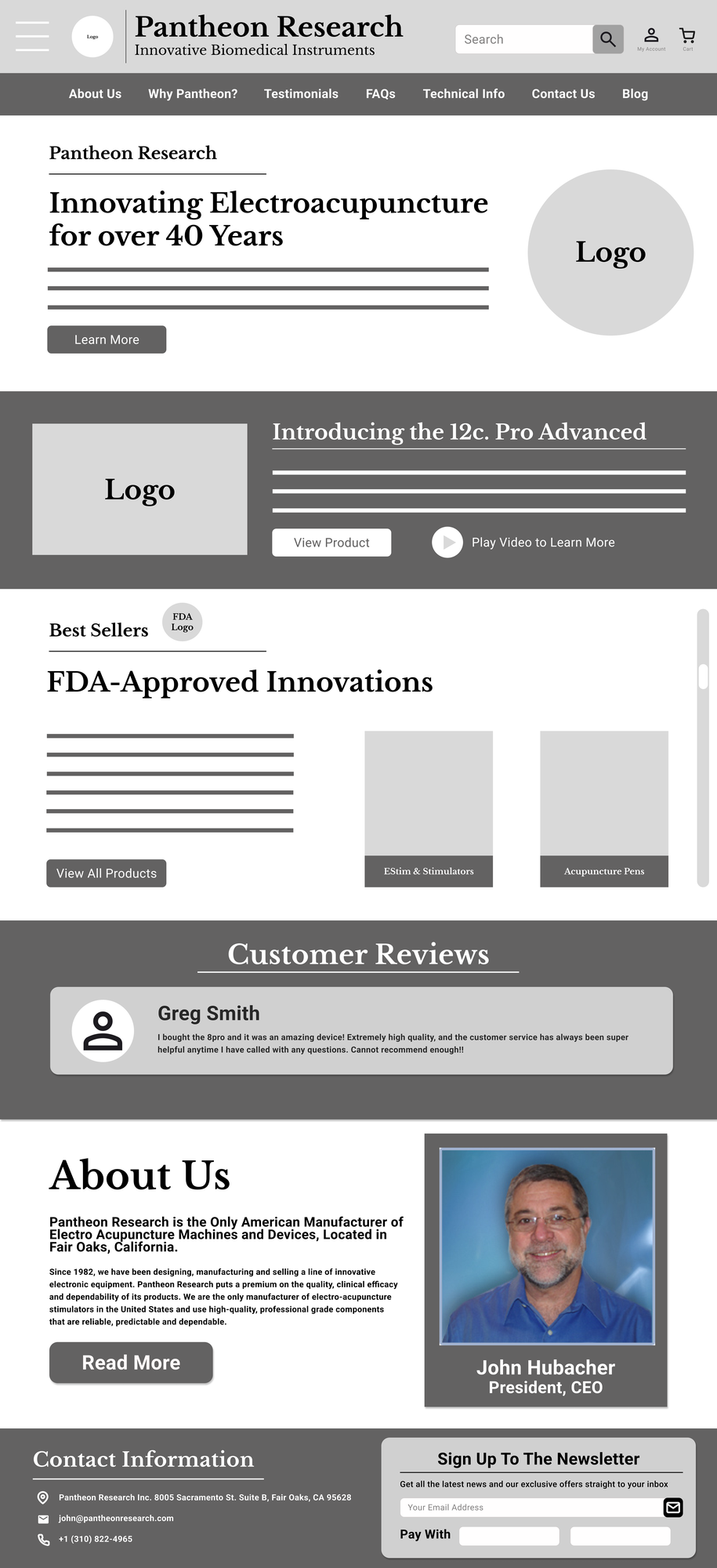
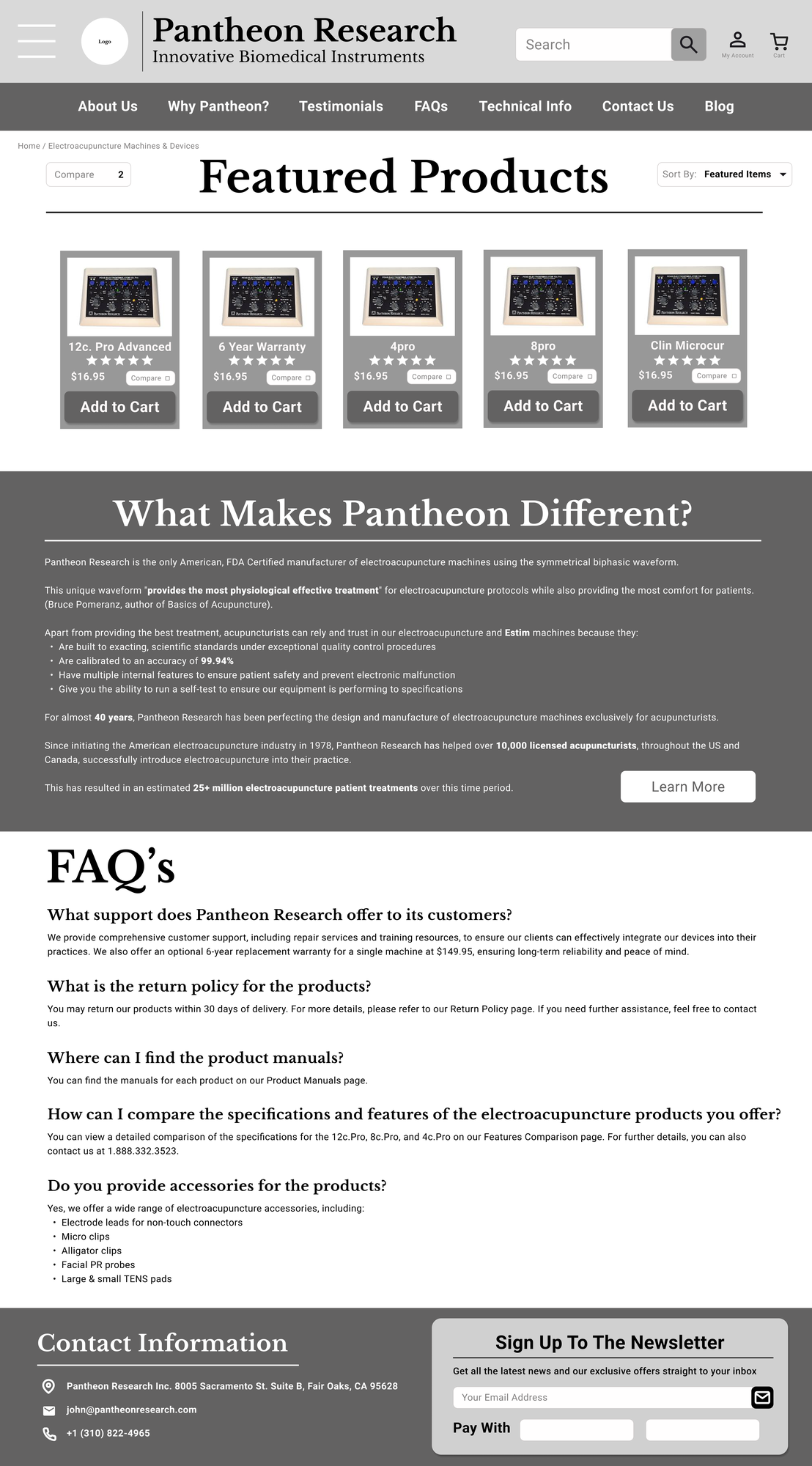
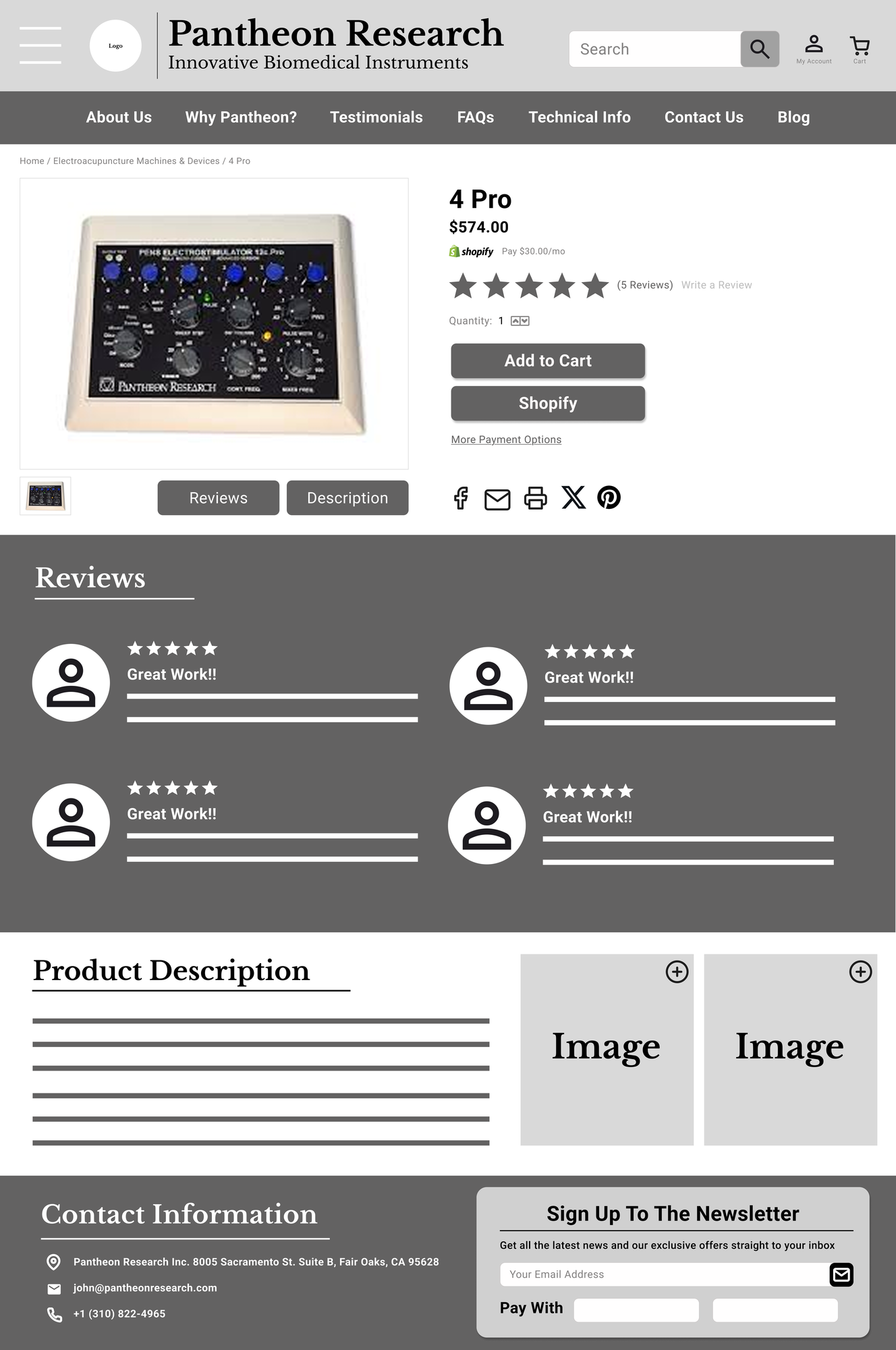
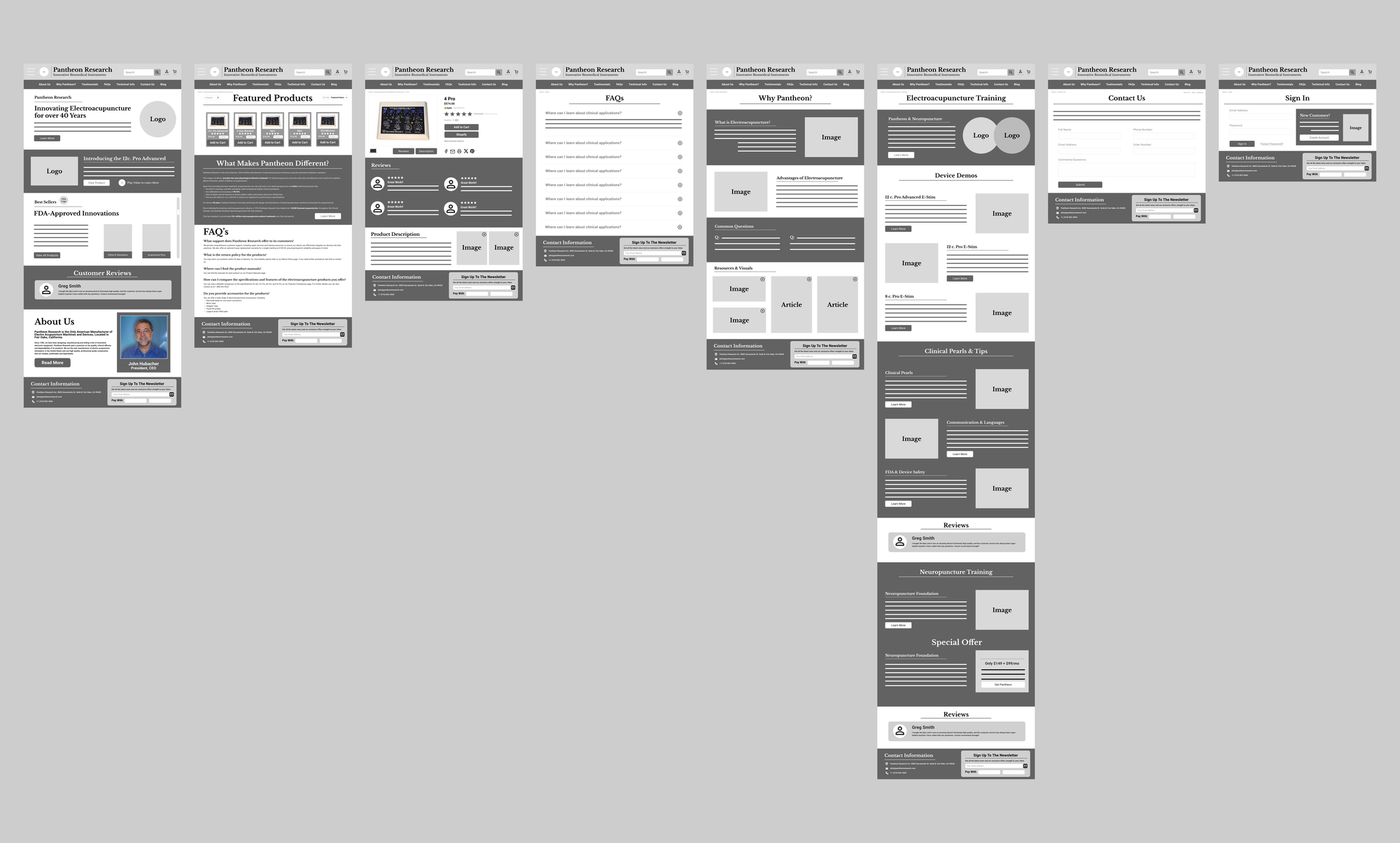
After showing my initial sketches and initial high-fidelity mockups to the clients, I received feedback that helped me refine the design & UX flow of the prototype. Taking this feedback, I took a step back and resketched the wireframes, then transferred them back into Figma to create a comprehensive low-fidelity prototype.
Solution
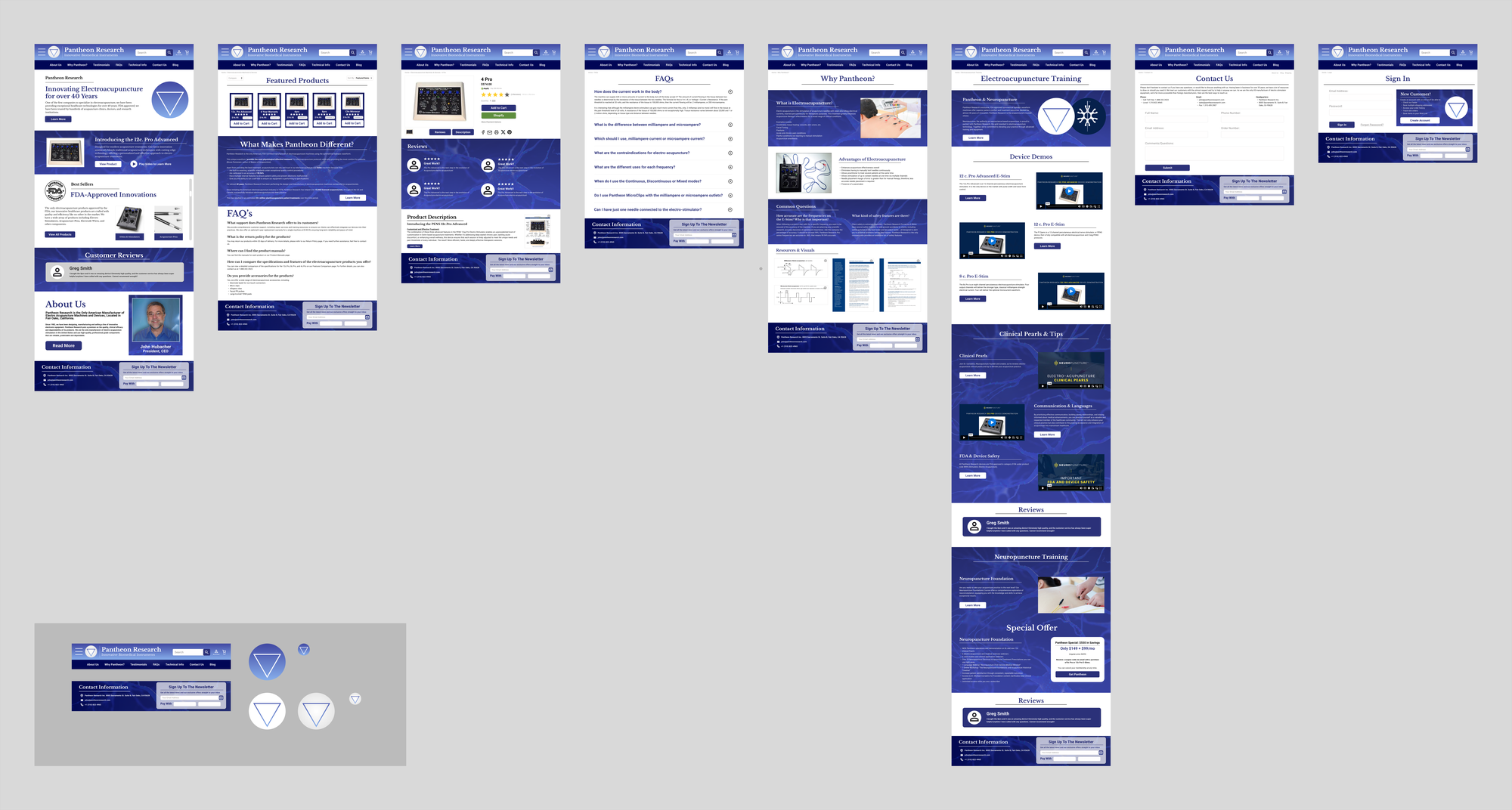
After showing my refined low-fidelity prototype to the clients, we aligned on the final design direction to move forward with. I was then able to take the branding I had developed earlier and assemble the finalized brand guide, and used this to polish up the high-fidelity prototype. Both the final brand guide and high fidelity prototype were handed off to the client at the end of the project.
Takeaways
This was my first experience consulting with a company client, and I learned a lot towards being a better designer and communicator. I was able to conduct competitive analysis and compare competitor sites, go through a comprehensive end-to-end design process from ideation to prototyping, and learned a lot more Figma skills such as creating reusable components and managing design systems.
Don't Jump to High-Fidelity
- I was excited to impress the clients, but take your time to iterate your ideas.
- Sketch out initial wireframes, move to low-fidelity mockups, then finalize high-fidelity designs.
Draw Inspiration from Winners
- There's always something to learn from successful competitors.
- Analyze winners within your relevant space, research their design choices and use it as a benchmark.
Reduce Steps when Designing
- Simplicity is key; avoid unnecessary complexity and repetition in your design process.
- Create repeatable design components to save time and maintain consistency.